
TMAC — Tool Monitoring Adaptive Control by Caron Engineering

Tool Monitoring Adaptive Control
TMAC
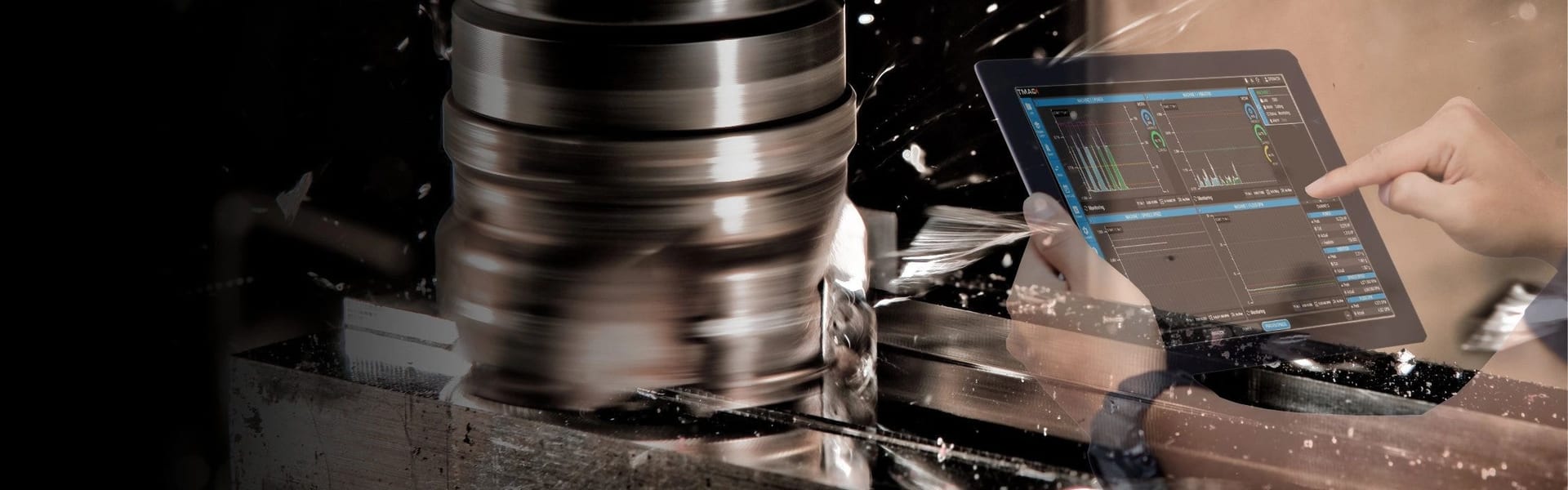
Real-time tool monitoring and adaptive feed-rate control for CNC machining. Using power, vibration, and strain sensors, TMAC learns your process, monitors every cut, and automatically adjusts to protect tooling and maximize throughput.
Real-time wear monitoring
Power, vibration & strain sensors
Tool breakage detection
Instant stop & tool retract
Adaptive feed-rate control
No operator intervention
Bearing health analysis
Results displayed within 5 seconds
Overview
Adaptive Tool Monitoring for CNC Machining
Caron Engineering's TMAC (Tool Monitoring Adaptive Control) interfaces directly with almost any CNC control to optimize the machining process and improve performance, productivity, and profitability. It uses high-resolution sensor data — including a 24-bit high precision power sensor, strain gauge sensor, and vibration sensor — to measure tool wear in real time and make automatic, instantaneous corrective adjustments without human intervention.
Unlike passive monitoring systems, TMAC closes the loop. When tool wear approaches a limit, TMAC adjusts the feed rate to maintain consistent cutting load. When a tool breaks, the machine stops instantly and retracts the tool. A powerful high-speed processor handles all communication between TMAC, the sensors, and the CNC control — monitoring multiple sensor channels simultaneously and reacting instantaneously to changing conditions.
How It Works
The TMAC Process
Sensor Input
Teach Cycle
Set Limits
Monitor & Compare
CNC Response
TMAC interfaces directly with almost any CNC control. The system learns the optimum sensor signature for each tool during a teach cycle — capturing power, vibration, and strain data — then monitors every subsequent cut against that baseline. Deviations trigger automatic feed-rate adjustments or machine stops without any operator input. A built-in web server allows remote configuration and monitoring from any network-connected device, including smartphones.
Capabilities
What TMAC Does
Tool Wear Detection
TMAC uses high-resolution sensor data to learn the optimum signature for each tool and cutting section. As the tool wears, TMAC compares live cutting data against the learned baseline and calculates wear in real time — automatically stopping the machine and retracting the tool before breakage damages the workpiece or spindle.
Tool Breakage Detection
TMAC detects sudden deviations in power, vibration, or strain that indicate tool breakage. The machine stops instantly and retracts the tool, preventing cascading damage, reducing scrap rate, and protecting expensive fixtures and workholding. A programmable redundant tool call can be triggered automatically when a wear limit is reached (control dependent).
Adaptive Feed-Rate Control
CNC programs are written for worst-case material conditions. TMAC continuously maintains a constant tool load by automatically adjusting the feed rate in real time — no operator intervention required. The Approach Feed Rate feature eliminates air cutting, and the result is faster cycle times, longer tool life, and consistent surface finish across every part.
Bearing Health Analysis
A vibration sensor attached to the spindle analyzes acceleration to detect bearing health and velocity to detect misalignment, imbalance, and looseness. Analysis is initiated directly from the CNC part program, results are displayed within 5 seconds, and reports are saved for trend analysis to establish proactive maintenance schedules.
Data Analysis & Trending
Every cut is recorded. TMAC's browser-based interface allows users to visualize the part program, interrogate CNC axis positions and program line numbers, overlay multiple runs to compare cuts, and apply custom filters to view, sort, and export events. All monitored data and events are stored and can be exported in various formats for analysis.
Specifications
Technical Details
Key system parameters for integration planning. Contact PTSI for full compatibility documentation and CNC-specific interface requirements.
| Power sensor | 24-bit high precision, multi-range, auto-scaling |
| Strain sensor | Strain gauge embedded in tool holder; includes built-in temperature sensor |
| Vibration sensor | Measures to 22 KHz with adjustable sensitivity; spindle-mounted |
| Additional monitoring | Spindle speed, coolant flow, coolant pressure |
| CNC interface | Direct interface with almost any CNC control |
| Processor | High-speed processor with built-in web server |
| User interface | Browser-based; remote access from any network-connected device including smartphones |
| Data storage | Full cut history; overlay, trend, and event analysis; exportable in multiple formats |
| Compliance | GEP11TF12 compliant |
Product Video
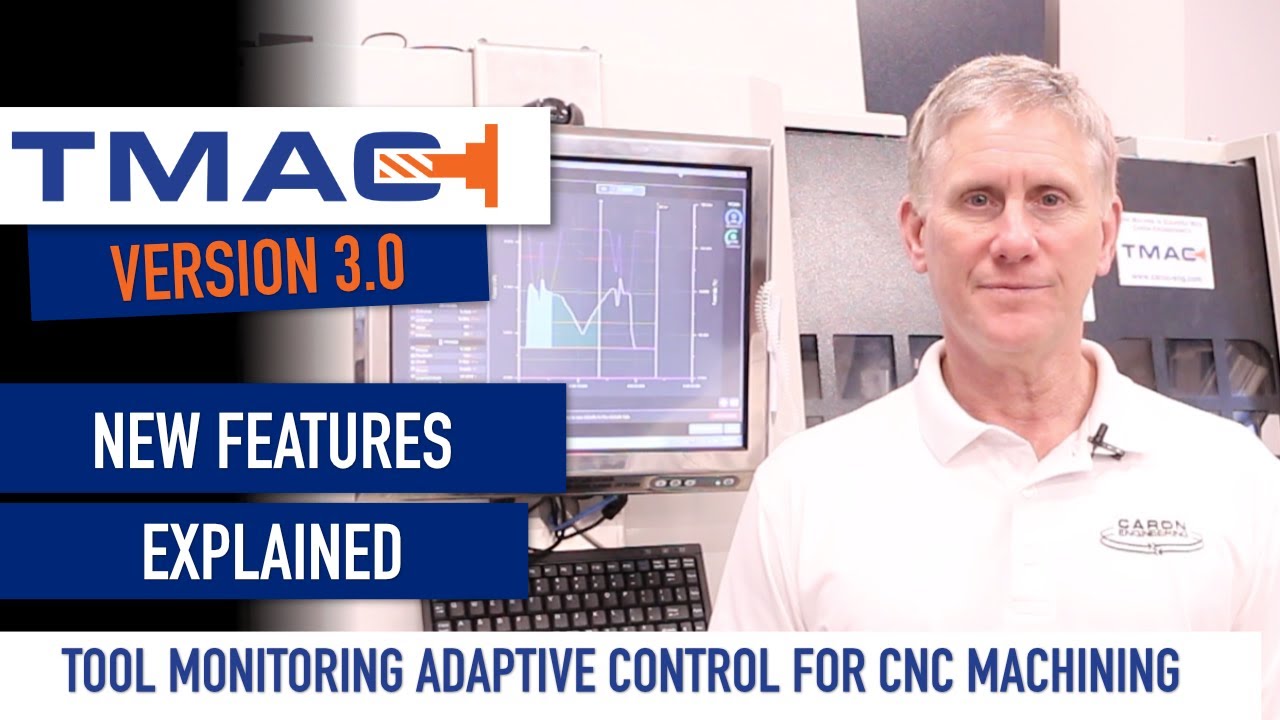
See TMAC in Action
Get Started
Talk to an Application Specialist
PTSI's engineers have deep experience integrating TMAC with a wide range of CNC controls and machining applications. We'll help you evaluate fit, plan the integration, and support commissioning.